Crime Magazine is about true crime: organized crime, celebrity crime, serial killers, corruption, sex crimes, capital punishment, prisons, assassinations, justice issues, crime books, crime films and crime studies.

 About  |  Advertise  |  Awards  |  Blogs  Books of NoteContact  |  Forums Links  | Newswire  |  Print  Store  |  Subscribe  |  Writer's Corner

Crime Books and Films

Under Surveillance

April 18, 2010 Special to Crime Magazine

Ron Chepesiuk’s book: The Trafficantes: Godfathers from Tampa, Florida: The Mafia, the CIA and the JFK Assassination

This is an excerpt from Ron Chepesiuk’s book: The Trafficantes: Godfathers from Tampa, Florida: The Mafia, the CIA and the JFK Assassination. The book is available for purchase from Amazon.com, Barnes and Noble and www.ronchepesiuk.com.

by Ron Chepesiuk

When the Mob put a $100,000 contract on his life, Joe Valachi decided to tell all to the authorities, and in 1962 he turned informant. Valachi became one of the most valuable federal witnesses ever, compelling the U.S. government to put Valachi in the Federal Witness Protection program and to guard him with up to 200 U.S. marshals.

In his nationally televised appearance before the McClellan Committee in 1963, Valachi formally identified 317 organized crime members, including Santo Trafficante. During the hearings, Trafficante’s photo appeared at the top of a chart depicting the organizational structure of the Tampa crime family. Santo liked to keep a low profile, but the American public now knew him as one of the country’s most important mobsters.

Ghosts of Bader Avenue

Bootleggers in the 1920's

Bootleggers in the 1920's

Our organized crime columnist, examines a perplexing unsolved double murder case from Cleveland.

by Allan May

On January 16, 1920, prohibition went into effect nationwide. Two weeks later, in Cleveland, Ohio, a double murder took place that shocked the city. Were the bootleg wars off to a bloody start in the city on the shores of Lake Erie? Or was there something else behind the murder of the two successful businessmen from New York. The police quickly advanced two murder theories. One was that the killings were due to a whiskey running operation - the victims were killed to prevent the arrest of other gang members, or to prevent a whiskey shipment from being confiscated. The second theory was that the killings were linked to a vendetta, family feud, or plot of the Camorra or the Black Hand.

Just after midnight on January 30, 1920, two Salvation Army workers, Sherman and Elizabeth Ransopher, were returning from a meeting in Cleveland. As they walked from West 25th Street down Pearl Road on the city’s near west side, Mrs. Ransopher spotted a leg extending from a ditch near the edge of the road at the corner of Bader Avenue and Pearl Road. She screamed. The couple slowly moved closer. Although it was dark, the couple had no problem making out three bodies piled together in the snow-filled ditch. The faces of the three bodies were covered with blood and small pools of blood had already begun to form beside them.

Cricket in the Web

June 01, 2008

The introduction to the book by author Paula Moore about the unsolved 1949 murder of Las Cruces, N.M. waitress Cricket Coogler.

Review of Murdered By Mumia: A Life Sentence of Loss, Pain, and Injustice by Maureen Faulkner and Michael A. Smerconish

Review of  Murdered By Mumia: A Life Sentence of Loss, Pain, and Injustice by Maureen Faulkner and Michael A. Smerconis

(The Lyons Press)

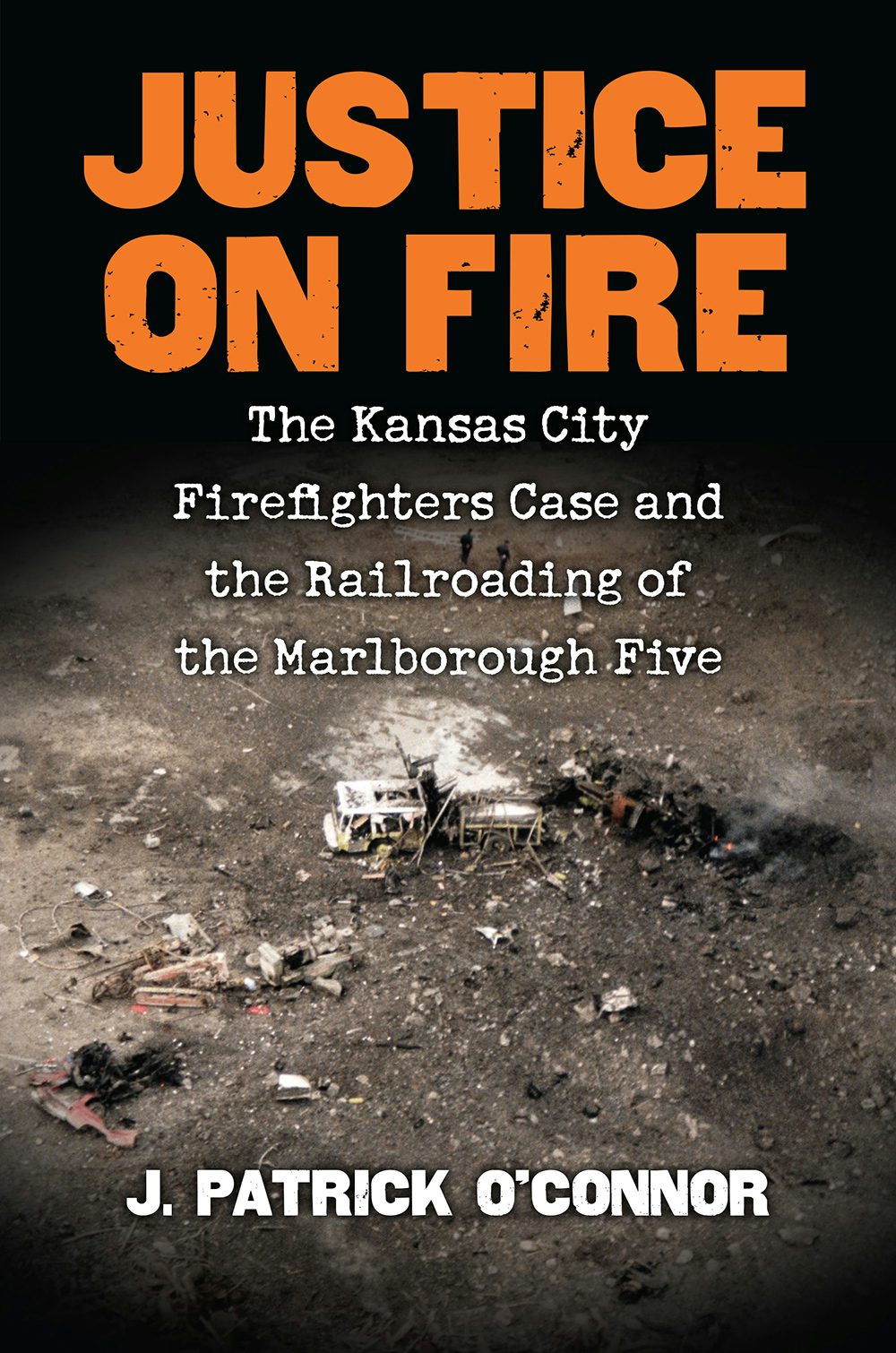
by J. Patrick O'Connor

Vendetta

There's a great deal to admire about Maureen Faulkner, the widow of Philadelphia Police Officer Daniel Faulkner who was shot to death on December 9, 1981. Less than six months later she bravely sat through the entire trial that concluded with Mumia Abu-Jamal's conviction for first-degree murder and a sentence of death. Over the next 25 years, while Abu-Jamal was becoming the Alpha symbol of the anti-death penalty crusade, Maureen Faulkner became its Omega.

As the "Free Mumia" movement began to take hold in the early 1990s, Mrs. Faulkner, now living in Southern California, felt repulsion. When the Yale Law Journal published an essay by Abu-Jamal in 1991 entitled, "Teetering on the Brink: Between Life and Death," she reacted as she would time and time again over the ensuing years by contacting the person responsible for the favorable treatment of Abu-Jamal. In this case, it was Yale editor Robert Gulack. When Gulack offered to publish an essay of hers, she told him "I wasn't asking for equal space. The point was that he was publishing the work of a murderer."

The Raid in Teaneck

October 14, 2007

The prologue from Ron Chepesiuk and Anthony Gonzalez's upcoming book, Superfly: The True Untold Story of Frank Lucas, American Gangster. (A major movie about Lucas entitled American Gangster and starring Denzel Washington and Russell Crowe will be in theaters beginning Nov. 2, 2007.) The book investigates Lucas's life and criminal career and the claims to fame the movie makes about him. This includes Lucas's relationship with legendary Harlem gangster Bumpy Johnson, his connection to La Cosa Nostra, the money he made in the drug trade and the development of the Asian drug pipeline. Lucas's life as a government informant is also examined. Beginning Oct. 25, 2007, Superfly can be purchased from the web site franklucasamericangangster.com. A documentary is also available.

by Ron Chepesiuk and Anthony Gonzalez

Crime Books of Note

Updated June 7, 2009


 Crime Magazine's List of Favorite Books on Crime, Criminals, and Criminal Justice

James Ellroy: The ‘Demon Dog’ of Crime Writing

James Ellroy

James Ellroy

Ellroy, the author of major crime novels such as L.A. Confidential, The Black Dahlia and his non-fiction account of his search for his mother's killer, My Dark Places, is a fascinating story himself.

by Patrick Quinn

Every dog has his day … and James Ellroy is certainly having his. But he doesn’t wear an Ivy League stamp of approval – or frankly even that of a small town high. This man went to the school of hard knocks. He learned through tragedy … which led to obsession, thieving and even drugs … which led to a collection of best-selling crime novels and a home in Mission Hills (a wealthy suburb of Kansas City).

Let us first put out the Dog. Dog – AKA the Mad Dog of Crime Fiction, AKA Barko – is the public persona of novelist James Ellroy, who quietly moved to Kansas City in the summer of 1995.

The nickname dates from Ellroy’s famously troubled childhood. There are many, many published descriptions of Dog, even a documentary film about Dog, but for the purpose of introduction we will reproduce Kansas City Star book review editor George Gurley’s straightforward description of the performing Dog, taken from his account of Ellroy’s reading at the Writer’s Place last June. Ellroy was promoting his thirteenth book, My Dark Places, an autobiographical account of his mother’s unsolved 1958 murder and his 1994 reinvestigation of the case:

Wearing one of his trademark pineapple shirts, legs spread as if to brace himself for a physical struggle, Ellroy introduced himself with a stream of gaudy profanities and taboo sexual images in doggerel. Addressing his audience as "Hep cats," he howled like a coyote, frowned with menace and gestured dramatically. "These books are incendiary," he said reciting a list of his titles. "These books can cure AIDS and cancer. If you buy five copies of my books, you will be able to have unlimited sex with each and every person on this planet you choose every night of your life." He identified Barko, the hound in his familiar publicity photos, as the true author of his works, as well as the paramour of various celebrities and the assassin of John F. Kennedy,…

Pages

Subscribe to RSS - Crime Books and Films