Crime Magazine is about true crime: organized crime, celebrity crime, serial killers, corruption, sex crimes, capital punishment, prisons, assassinations, justice issues, crime books, crime films and crime studies.

 About  |  Advertise  |  Awards  |  Blogs  Books of NoteContact  |  Forums Links  | Newswire  |  Print  Store  |  Subscribe  |  Writer's Corner

Corruption

"Undying Loyalty"

Thomas A. Aurelio

Thomas A. Aurelio

In August 1943, Thomas A. Aurelio stood at the threshold of a dream. After nine years as an assistant prosecutor and 12 as a judge in New York City, he was about to be elected to a seat on the Supreme Court for the State of New York. Then Aurelio, in a wiretapped conversation, was overheard swearing his undying loyalty to gangster Frank Costello.
by Allan May

In August 1943, Thomas A. Aurelio stood at the threshold of a dream. After nine years as an assistant prosecutor and 12 as a judge in New York City, he was about to be elected to a seat on the Supreme Court for the State of New York. As the nominee of both the Democratic and the Republican parties, the election of the 48-year-old father of two appeared to be a formality.

Aurelio’s career had the sense of manifest destiny to it. He was a native New Yorker who grew up on the city’s East Side. Educated in the public school system, he went to college at New York University where he also earned a law degree. During World War I he served in Company F of the 51st Infantry Regiment. After the armistice, he taught American soldiers commercial law in a military school in Germany.

Returning home, Aurelio was admitted to the bar. In 1922, he was appointed assistant district attorney at the age of 27. Mayor Jimmy Walker appointed him a judge in 1931 and four years later he was re-appointed by Mayor Fiorello La Guardia. During a glowing swearing-in ceremony La Guardia stated, "I have re-appointed you because I know of your record, and have known you as a boy and a law student. You are the kind of career man I want on the bench." A review of Aurelio’s record as a judge showed his strong support of the police when their efforts brought them into conflict with big-name criminals.

As impeccable as Auerlio’s career had been, a seemingly unrelated event – the murder in January 1943 of Italian-language newspaper editor Carlo Tresca – would inadvertently snare Auerlio and derail his cake walk to the New York Supreme Court.

Cons, Frauds, and Schemers

January 1, 2007

Interstate 40 and the Arkansas River May 26, 2002

They can look you in the eye, win your trust and melt your heart. They can lie about the past, the present, and the future. They are chameleons, changing names and identities as easily as we change our outfits.

by Lona Manning

They are conmen and women. They are sociopaths.

Some of the names of the victims in this article have been changed or withheld to protect their privacy.

Traitor in the White House

December 30, 2008

Solving the JonBenet Case

April 14, 2003

JonBenet Ramsey

JonBenet Ramsey

by Ryan Ross

Copyright by Ryan Ross. 2003. All rights reserved.

Related Story: The Murder of JonBenét Ramsey by JJ Maloney and J. Patrick O'Connor

Editor's Note:

On July 9, 2008, Boulder County District Attorney Mary Lacy stated that DNA tests conducted by Bode Technology Group revealed that skin cells left behind on JonBenet Ramsey's long underwear point to a killer other than the girl's parents, John and Patsy Ramsey, or her brother, Burke. Mrs. Ramsey died of ovarian cancer in 2006 at age 49.

"To the extent that we may have contributed in any way to the public perception that you might have been involved in this crime, I am deeply sorry," Lacy wrote in an exoneration letter to John Ramsey, who now has remarried and lives in Michigan. "No innocent person should have to endure such an extensive trial in the court of public opinion."

Early in the investigation into the 6-year-old pageant star's brutal murder on Christmas night in 1996, Lacy said that Boulder police discovered male DNA in a drop of blood on JonBenet's underwear that did not match any members of JonBenet's immediate family. The tests conducted by Bode Technology Group, Lacy said, revealed the same DNA that was found previously in the drop of blood was present in three places on JonBenet's long underwear.

Lacy stated that Boulder investigators now hope they'll eventually find a DNA match in the ever-expanding national DNA databank, a sentiment echoed by John Ramsey. "I think the people that are in charge of the investigation are focused on that, and that gives me a lot of comfort," Mr. Ramsey said in an interview with a Denver TV station. "Certainly we are grateful that they acknowledged that we, based on that, certainly could not have been involved."

Even if a DNA match is eventually made, it does not mean that the DNA from this contaminated crime scene will reveal it to be that of JonBenet's killer, although it possibly could. For now, all that is known, is that it is not the DNA of John, Burke, or the late Patsy Ramsey. In the meantime, the JonBenet case will continue unsolved and will remain one of the most botched crime investigations in the annals of U.S. law enforcement.


It's time for closure. More than six years have passed since JonBenet Ramsey was killed. Most all the evidence is in. The principals have had more than enough time to ponder, scrutinize, and digest. The grand jurors have long since heard, deliberated, and gone home without a peep. The new district attorney isn't up to the job. The media are desperate for a climax — any climax.

The public — misled by assorted media jackals clamoring for microwave justice — pines for a murder trial that will never happen, all but resigned to an O.J.-esque outcome in which there is no closure, and where doubts and suspicions linger as long as memory allows.

Some have moved on. Others will perpetuate the hand wringing about how the system failed.

No one will be satisfied. And the truth will remain buried.

But there is a way out of the morass. The mysterious 1996 killing of beauty queen JonBenet Ramsey of Boulder, Colo., doesn't have to be another O.J. There is still time. The police blunders were not fatal. The right laws are on the Colorado books. Secret statements by prosecutors suggest the evidence is strong. All that's needed now is a strong Colorado governor willing to intervene by appointing a special prosecutor to take over the case.

Even if Gov. Bill Owens does appoint a special prosecutor, getting to the bottom of the mystery is not going to be easy. The key players all bring ample flaws to the table. The process has more potholes than pavement. And given the track record of events since the night JonBenet was killed, more blunders by those responsible for ensuring justice are likely.

But it can happen nonetheless, and it won't take a miracle.

The Beauty of White-Collar Crime: Do the Crime Not Much Time

Could a Midwestern resort town with a struggling economy be bamboozled out of $25 million by a chain-smoking, fancy-dressing New Yorker? Yes. So how much time did this flimflam man get? Six months.

by Ronald J. Lawrence

Prologue

When Harvey Martin Zelin came to the Lake of the Ozarks in central Missouri in 1984, he was heralded, not only by others, but by himself, as a Messiah who would lead the people of this extensive recreational area into financial paradise. He would replace the bitter taste of disappointment and deprivation many of its residents knew with the sweet taste of prosperity. Economic revival with its accompanying wealth, he assured them, was just around the corner and he would make it happen.

Zelin, a well-dressed high roller in his late 40s, was flamboyant and glib. He maintained a high profile, dressing himself in the affluence of a successful venture capitalist. He gave the common people of the lake a glimpse of the opulence he promised them. The jewelry, real or fake, that adorned his fingers and wrist was dazzling. The new white Cadillac he drove bore personalized license plates with the initials "HMZ." He bought a lavish house along the wooded shoreline of the lake and called it "Harvey's Hideaway." They, too, someday could share in that lifestyle.

For the lake people, many of them not far from the poverty line, the chain-smoking Zelin was the Music Man gone corporate. He told them what they wanted to hear, that he was no different than they. As they had, he had come from humble beginnings. He had been a dude ranch manager in the Catskills, a medical supply salesman on the East Coast and, of late, a real estate investor in Houston. After all, he was "just a small businessman." Not long before he also had been poor. A friend of his would confide that when Zelin left New York City only a few years earlier, it was with a one-way bus ticket and a $20 bill in his pocket.

Harvey Martin Zelin's covenant with the people was his word – trust me and you will prosper. But was Harvey Martin Zelin the financial wizard, the benefactor, he claimed to be?

River Quay: How a Courageous Newspaper, and an Ex-convict Reporter, took on the Kansas City Mafia, and Won

The City Market Kansas City, Missouri

The City Market Kansas City, Missouri

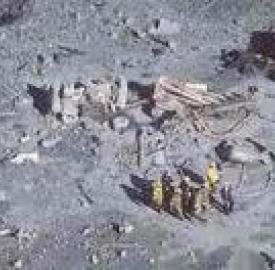
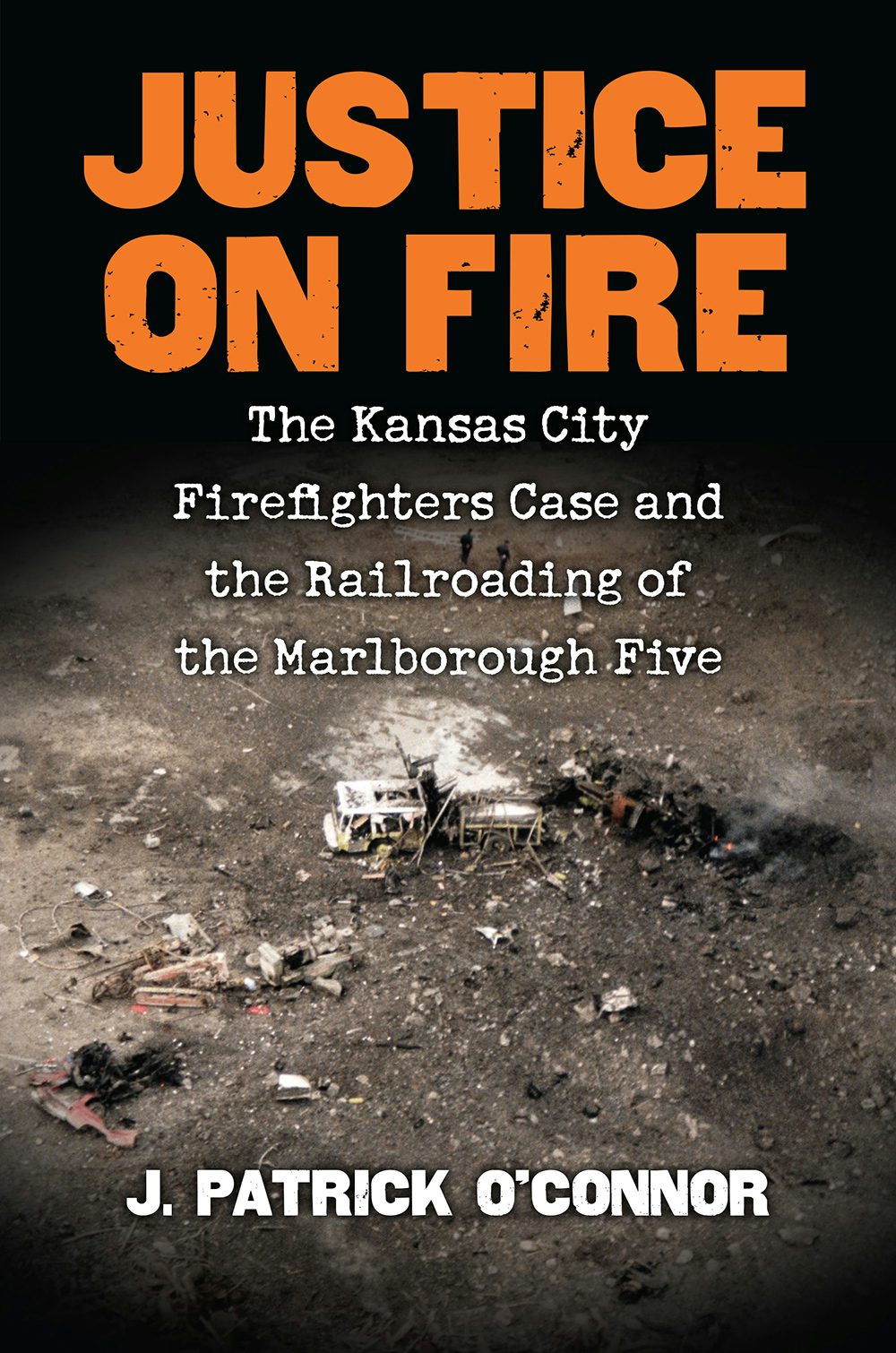
A first-hand investigative report of the Kansas City Mafia's attempt to take over a major Kansas City entertainment area in the mid-1970s -- an effort that included bombings, extortion, and a large number of murders.

by J.J. Maloney

Every city dreams of greatness. To achieve an identity it constructs symbols (the Eiffel Tower, the St. Louis Arch), or, like New Orleans, has an area, such as the French Quarter, that assumes an identity of its own.

Traditionally Kansas City has been known as a cowtown. It was famous for its stockyards, and the biggest annual event still is the American Royal, during which journalists shake cow patties from their shoes. Kansas Citians are sensitive about that image, feeling it gives them a "hick" reputation.

They point with pride to the Country Club Plaza or Westport, but neither has ever achieved a national reputation. They promote Kansas City as the birthplace of jazz, a claim other cities dispute. They go so far as to call Kansas City the home of great barbecue; local politicians devote great amounts of space to that subject. Such is the desperation for an identity.

Hunting Down Vito Genovese in WWII Italy

June 1, 2007

Vito Genovese

Vito Genovese

Tim Newark is the author of the recently published Mafia Allies: the True Story of America's Secret Alliance with the Mob (Zenith Press). This article is an adapted extract from that book.

by Tim Newark

Top Mafia Mobster Vito Genovese fled New York in 1937 and settled in with the Fascist regime in mainland Italy. When the Allies invaded Italy, he swiftly changed sides and became close to the senior Allied administration. It would take a remarkable young CID officer by the name of Orange C. Dickey to hunt him down.

Pages

Subscribe to RSS - Corruption