Crime Magazine is about true crime: organized crime, celebrity crime, serial killers, corruption, sex crimes, capital punishment, prisons, assassinations, justice issues, crime books, crime films and crime studies.

 About  |  Advertise  |  Awards  |  Blogs  Books of NoteContact  |  Forums Links  | Newswire  |  Print  Store  |  Subscribe  |  Writer's Corner

Innocence Cases

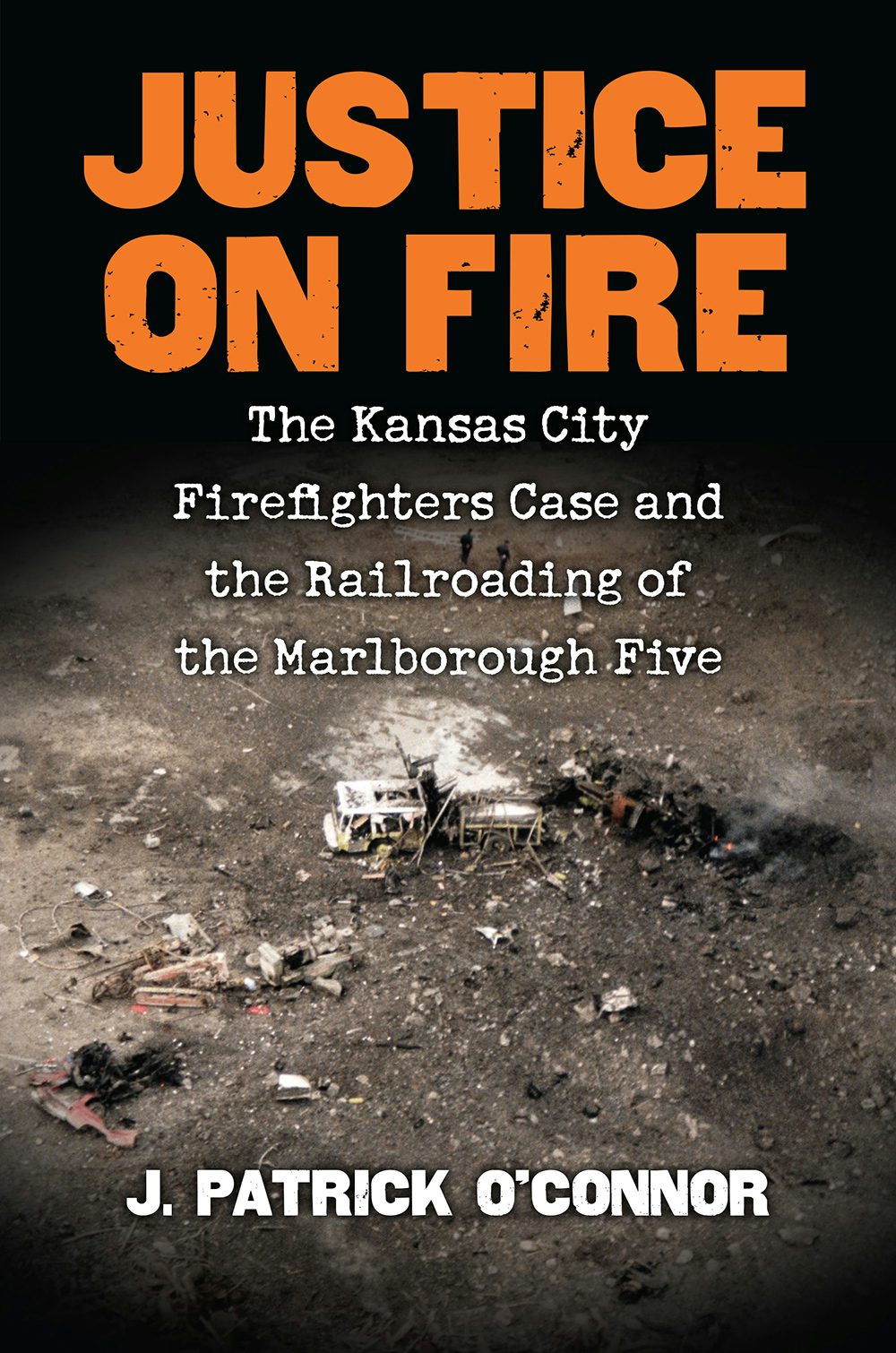
Railroaded Part II: The Firefighters Case

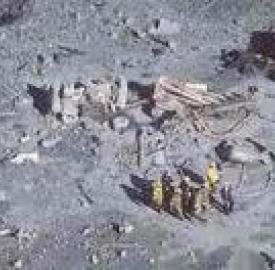
South Kansas City Blast Site 1988

South Kansas City Blast Site

Five innocent people were convicted in February 1997 in the deaths of six Kansas City firefighters in 1988.  These two stories run a total length of 20,000 words, and won the Missouri Bar Association's annual "Excellence in Legal Journalism" award. On Oct. 30, 1998, the 8th U.S. Circuit Court of Appeals denied the appeal in the Kansas City Firefighters case. Read the full opinion here and our analysis of the opinion. On Oct. 4, 1999, the U.S. Supreme Court declined to grant certiorari in the case.

by J.J. Maloney

[Editor's Note: to read more about this case go to http://kcfirefighterscase.com ]

Indictment and Trial

The ATF has four "National Response Teams" - teams which respond to disasters such as the Oklahoma City bombing - and Special Agent Dave True was leader of the Midwest team. He is a distinguished looking man with silver hair and mustache.

With 26 years of government service under his belt, True, who was in his early 50s, was ready to take retirement from the ATF and open the next chapter in his life, possibly as a consultant or a security executive for a corporation. There was a hitch, though. For more than eight years, the unsolved firefighters case had dogged him. As the ATF's top special agent in Kansas City, True didn't want to retire with the biggest case of his life hanging over his head, unsolved.

According to True's testimony at trial, the firefighter investigation was dead in the water by November, 1993. (For five years, True had maintained steadfastly that organized labor was responsible for the explosion.) Then he testified that he got a call from Captain Joe Galetti of the Kansas City Fire Department, who wanted True's help in getting the case on the "Unsolved Mysteries" television show, a last-ditch effort to solve the case.

In November, 1994, as the "Unsolved Mysteries" segment on the case was being prepared, True said he received a call from a witness saying Richard Brown had admitted to being involved in the explosion. "If there was a starting point for investigating the Marlborough area," True testified, "that was probably it."

The Wrongful Execution of Caryl Chessman

Sept. 30, 2009 Updated June 25, 2010

Caryl Chessman

Caryl Chessman

Convicted in 1948 as “The Red Light Bandit,” Caryl Chessman would become an internationally known “Death Row” author and make the cover of Time Magazine. His appeal attorney came within minutes of preventing his wrongful execution in 1960.

by Randy Radic

Attorney Rosalie Asher’s eleventh-hour appeal to a California Supreme Court judge came within minutes of halting the wrongful execution of Caryl Chessman in 1960.  On May 2, 1960, as Chessman was being strapped into the chair in the gas chamber at San Quentin, Asher was in Sacramento, presenting a motion to Judge Goodman of the California Supreme Court.  Judge Goodman was intrigued by her presentation, which was a photograph of Charles Terranova, who fit the description provided by victims of the “Red Light Bandit.”  Terranova had a record of 13 convictions for crimes committed in the Los Angeles area, along with an FBI rap sheet for armed robbery and attempted rape.  And more importantly, in Chessman’s very first interview with the police after his arrest, Chessman had said, “The guy you’re looking for is Terranova.  The red light and the sexual assaults, that’s all him.”

Judge Goodman said he needed more time to study it.  Rosalie Asher told him there was no time.

Judge Goodman issued a one-hour stay of execution so that he could study the motion.  He instructed his secretary to call the warden at San Quentin.  When told to halt the execution, the assistant warden, Reed Nelson, replied that it was too late.  “The execution has begun.”

The pellets of cyanide had already been dropped into the sulfuric acid, which sat in a bucket beneath Chessman’s legs.  The deadly fumes tendriled up to his mouth and nose.  It took him eight minutes to die.

Three hours later a black hearse from the Harry M. Williams Funeral Home in San Rafael arrived to pick up the blue-green, lifeless body of Caryl Chessman. The following Monday afternoon, Chessman’s corpse was cremated at the Tamalpais Cemetery in San Rafael.  Two people watched as the cremation occurred:  the mortician, and a woman who had placed two red rosebuds on the coffin before it entered the oven.  The woman’s name was Bernice Freeman.  There was no ceremony, no religious rites. 

“The Mumia Exception”

May 1, 2009

Mumia Abu-Jamal

Not even the U.S. Supreme Court is immune from “the Mumia Exception.” On April 6, 2009 the high court denied Abu-Jamal’s request for a Writ of Certiorari, scuttling his last chance for justice.

by J. Patrick O’Connor

The Shame of Lorain, Ohio

December 6, 2002 Updated: April 17, 2011 

Nancy Smith, center, with her four teenage children.

Nancy Smith, one of two people wrongfully convicted in this case 15 years ago, was released on bail February 4, 2009 pending a resentencing hearing.)

 The ritual abuse hysteria that swept across the United States in the 1980s and early 1990s resulted in hundreds of innocent people being wrongfully convicted of committing a bizarre concoction of sexual acts on preschoolers. Most of those convicted were eventually freed from prison on appeal, but some innocent people remain behind bars. One of the most blatant cases of wrongful conviction occurred in Lorain, Ohio. There a politically ambitious prosecutor's office coaxed and manipulated a few Head Start preschoolers into testifying that they had been sexually abused repeatedly over a six-month period by their bus driver and some stranger -- two people who never even knew each other, but who are now serving life prison terms for crimes that never occurred in the first place.

by Lona Manning

In a stunning reversal, Nancy Smith and Joseph Allen have been ordered back to prison to resume their lengthy sentences after two years of freedom. This past January, the Ohio Supreme Court overturned Court of Common Pleas Judge James Burge’s February 2009 ruling that set them free from their living nightmare. Smith and Allen remain free for the time being while the decision is appealed.

Lorain County Prosecutor Dennis Will contends that he had to appeal Judge Burge’s action to a higher court because the precedent set by Judge Burge would have allowed thousands of others to appeal their sentences as well. Smith’s lawyer found a clerical error in her sentencing order, which led to Judge Burge’s decision to set aside their sentences. Lorain County successfully argued that Judge Burge had no authority to free them and should have merely corrected the error. While Prosecutor Will still maintains that Smith and Allen were guilty of heinous crimes against children, Judge Burge became convinced of the pair’s innocence after reviewing their case.

Judge Burge told the Chronicle Telegram that because of the ruling he has no alternative but to send two innocent people back to prison. “I never thought I would witness anything quite so tragic in the criminal justice system, much less be any part of it,” the judge said.

The dramatic twists and turns in the case have finally reawakened media interest. In recent weeks, Rachel Dissell of the Cleveland Plain Dealer has reported that:

 Lorain Police Chief Cel Rivera, who was involved in investigating the case, admitted to Nancy Smith’s daughter that he now doubts Smith’s guilt; the long-suppressed video of the police line-up of Joseph Allen demonstrates that children were coached to finger Allen; (click here for (part 2) and (part 3) of the video); one of Allen’s child accusers now says he has doubts that he was molested.

Smith’s and Allen’s lawyers have vowed to continue to fight on behalf of their clients and the Ohio Innocence Project is also investigating the case.

Speaking Truth to Power

April 5, 2009

Bookcover: Jailhouse Lawyers by Mumia Abu Jamal

Mumia Abu-Jamal's 27 years on Death Row for a murder he did not commit would have turned almost anyone else into an embittered, defeated man. Instead, he has remained what he always was, "the voice of the voiceless," as he demonstrates yet again in his most recent book, Jailhouse Lawyers: Prisoners Defending Prisoners v. the U.S.A. (City Lights Books, 2009.)

 by J. Patrick O'Connor

Through hundreds of essays, radio commentaries and now six well-written, meticulously researched books, he has defied the walls that encase him to speak out against oppression. His voice his heard weekly throughout the United States on Pacifica Radio and his writings are read and admired throughout much of the world. From the bowels of Death Row, where 3,600 others languish in the United States, Abu-Jamal presses on for justice, day after day, year after year.

Jailhouse Lawyers: Prisoners Defending Prisoners v. the U.S.A. opens a tightly shut door into the operations of the U.S. penal system by chronicling the exploits of dozens of jailhouse lawyers – both men and women – who have fought the injustices the courts and the prisons have dealt them and their fellow prisoners. Their accomplishments, against all odds, have been incredible. Their story is a story never before told.

For the vast majority of the 2.3 million prisoners in the United States and for Abu-Jamal himself, the overriding, inescapable reality about the U.S. justice system is that the law is only what a judge says it is.

Pages

Subscribe to RSS - Innocence Cases