Crime Magazine is about true crime: organized crime, celebrity crime, serial killers, corruption, sex crimes, capital punishment, prisons, assassinations, justice issues, crime books, crime films and crime studies.

 About  |  Advertise  |  Awards  |  Blogs  Books of NoteContact  |  Forums Links  | Newswire  |  Print  Subscribe  |  Writer's Corner

Innocence Cases

Justice on Trial

Aug 13, 2012

The statue of Lady Justice at Dublin Castle

The statue of Lady Justice at Dublin Castle

Justice on Trial is a landmark study of prosecutorial misconduct conducted by the Northern California Innocence Project at Santa Clara University School of Law and released in October of 2010.

In 2007, a California Court of Appeal set aside the murder conviction of Mark Sodersten because a Tulare County deputy district attorney had improperly withheld from the defense audiotapes of his interviews with a key witness.

The Appeals court personally listened to the tapes and concluded they contained dramatic evidence pointing to Sodersten’s innocence. Based on this finding, the court vacated his conviction. “This case,” the court declared, “raises the one issue that is the most feared aspect of our system—that an innocent man might be convicted.”

For Sodersten, however, the ruling came too late. He had died in prison six months earlier, after spending 22 years behind bars. The prosecution had sought the death penalty, but the jury sentenced him to life without parole.

The ruling was one of 707 cases of prosecutorial misconduct uncovered in a year-long investigation by the Northern California Innocence Project (NCIP) at Santa Clara University School of Law.

The investigation, made public October 4, 2010  is the most in-depth statewide review of prosecutorial misconduct in the United States.

The Crime That Never Happened

May 21. 2012

Farah Jama

Farah Jama (L)

Farah Jama, a 21-year-old Somali immigrant in Australia was convicted – based on contaminated DNA evidence – of raping a woman he had never met at a bar in Melbourne he had never been to. His exoneration, after 16 months in prison, led to important reforms in how DNA material is collected from rape victims. 

by Liz Porter

All over the world, young men sometimes still go to prison for crimes they didn't commit. But in 2008, in Melbourne, Australia, a 21-year old Somali-born student went to jail for a crime that didn't even happen. This unlucky young man was not the victim of police corruption or manufactured evidence. Instead, he was convicted by a piece of forensic evidence produced in a one-in-a-million “CSI moment:” the kind of improbable, but theoretically possible scientific episode that only a scriptwriter for the famous CBS series might dream up.

Sadly for Farah Jama, his “CSI moment” was real. It happened at Melbourne’s Austin Hospital, one of several in the city with suites of rooms where rape victims are taken for forensic examination.

It was here, in the early hours of Saturday, July 15, 2006, that an agitated young woman was waiting for the on-call forensic doctor to arrive and examine her. There was a sticky-looking substance in her hair: male ejaculate from a sexual encounter she’d been involved in a few hours earlier. The episode, involving oral sex, had not been romantic. But the girl hadn’t been  raped. A girlfriend had urged her to pursue a rape allegation, but she later withdrew it.

As the young woman paced up and down, her hair was shedding tiny, invisible fragments of male DNA. These unseen flecks floated in the air, some near a trolley holding swabs, slides and other equipment. One tiny fragment landed in an open box of slides. It sat there, a microscopic forensic time bomb, waiting to go off.

Just over 24 hours later, the same forensic doctor returned, having been called in to examine another patient. As the woman lay down on the bed next to the trolley, the doctor opened the box of slides, unaware that at least one of them was already contaminated with male DNA. With a gloved hand she took a sample from the woman and dabbed it on to the slide. She then sealed the slide in an evidence bag, and handed it to the waiting police.

Four months later, that tiny forensic bomb exploded.

Mass Murder at the Teigin Bank

April 2, 2012

Sadamichi Hirasawa

Sadamichi Hirasawa

Sadamichi Hirasawa poisoned 16 people for the equivalent of a few hundred pounds in cash. Or did he?

by Robert Walsh

Just before closing time at the Teigin Bank in the suburbs of Tokyo, on January 26th, 1948, a nondescript and middle-aged man walked in through the front entrance. He was later identified, possibly incorrectly, as artist Sadamichi Hirasawa, but claimed to be Dr. Jiro Yamaguchi and had a business card to prove it. He left less than an hour later, but what happened between his arrival and departure was to shock the whole Japanese nation and reverberate through the Japanese courts for decades to come.

The man identifying himself as Dr.Yamaguch arrived wearing an armband bearing the label “Metropolitan Office, City Hall of Tokyo,” carrying a medical bag over his shoulder. He explained that dysentery had broken out in the area and that he had been sent to vaccinate the bank’s staff. Tokyo having been very heavily bombed during the later stages of World War II meant that dysentery (and other diseases) could still pose serious public health problems and, the Japanese being a people usually deferential to and respectful of authority figures, the bank staff both believed and obeyed him implicity. None of them suspected, even slightly, that Dr. Yamaguchi wasn’t who he claimed to be.

Most of them would pay for this trust with their lives.

Scapegoat: The Chino Hills Murders and the Framing of Kevin Cooper

Jan. 30, 2012 Special to Crime Magazine

An excerpt from the recently released book Scapegoat: The Chino Hills Murders and the Framing of Kevin Cooper by J. Patrick O’Connor, editor of Crime Magazine.  Published in January of 2012 by Strategic Media Books, Scapegoat is available at www.strategicmediabooks.com, Amazon.com, barnesandoble.com and other book sellers throughout the United States. Scapegoat won Silver in the 2013 Independent Publishers Book Awards for True Crime.

 by J. Patrick O’Connor

Foreword

During the fall of 2008, I was in the San Francisco Bay area on a book tour for The Framing of Mumia Abu-Jamal.  The tour was arranged by Jeff Mackler, the executive director of the Mobilization to Free Mumia Abu-Jamal, and it involved about fifteen speaking engagements at different venues.   Jeff told me that supporters of death-row inmate Kevin Cooper – whom I had not heard of -- would be attending a number of these presentations, and that they would be asking me to write a book about Kevin’s case.  Indeed, two of Cooper’s most dedicated supporters, Carole Seligman and Rebecca Doran, did just that. 

Cooper had been convicted in 1985 of the brutal murders of Doug and Peggy Ryen, their ten-year-old daughter, Jessica, and eleven-year-old houseguest Christopher Hughes, and the attempted murder of the Ryens’ eight-year-old son Joshua. 

Jeff had gotten to know Cooper over the years, and had visited him about twenty times. Kevin’s case was quite different from Mumia’s, he said, in the sense that Mumia is essentially a political prisoner and Kevin was anything but. 

When I decided to begin researching the Kevin Cooper case in early 2009, I had no pre-conceived notions about his guilt or innocence.  Each case is different, radically so.  My first step was to read and notate the trial transcripts, documents of over eight-thousand pages.  I then read all the police reports, witness interviews and various newspaper accounts.  Finally, I read all of the appeals and the judicial rulings.  By this time I was ready to begin interviewing various people involved in Cooper’s trial and his subsequent appeals. 

One problem in researching a crime nearly twenty-five years after it occurred is that a number of key people involved in the investigation and trial have passed away or have retired or have simply forgotten important factual details.  Another obstacle is that, because Cooper technically still has appeals open to him, the San Bernardino County District Attorney’s Office refused to discuss the case.

During the summer of 2009, I made arrangements to interview Kevin Cooper in a visitor’s cell on death row at San Quentin.  On several issues, particularly those regarding his criminal record previous to the Chino Hills trial, I found him protective and less than forthcoming.  That was all behind him, he seemed to suggest.

On the other hand, I was taken by his equanimity and his resolve to prove he was wrongfully convicted of the gruesome Chino Hills murders.  I could see that the many years he had spent on death row, instead of diminishing him, had turned him into a person worthy of the high regard that his supporters – and his attorneys at the Orrick law firm – felt for him.  On death row, Kevin Cooper had finally grown up. 

Contrary to popular belief, most of the nation’s more than three-thousand-five-hundred death row inmates do not profess innocence.  In fact, unlike Kevin Cooper, very few do.  For those who do, the road to exoneration is a long, slow trek that usually fails.  But it does succeed occasionally.  Since 1973, when the U.S. Supreme Court allowed states to resume executions, one-hundred-thirty-six death-row inmates have been exonerated.  In the majority of those cases, the proof of the inmate’s innocence was so convincing that the prosecutor dropped the charges rather than retry the case.  In forty-five cases where there was a retrial, the inmate was acquitted. 

There are two things that do link the Mumia Abu-Jamal and Kevin Cooper cases: Each was prosecuted by a district attorney’s office hell bent on winning a death-penalty conviction; and neither defendant received a proper defense.  What separates the two cases is that, while Mumia’s trial was a mockery of the justice system’s standards for a fair trial, Cooper’s trial had the trappings of fairness – but was lost long before the trial opened.  Two pre-trial developments caused this outcome: The San Bernardino County Sheriff’s Department destroyed evidence that could have exonerated Cooper; and his public defender insisted on going it alone.  Not many Davids actually slay Goliaths. 

This then is a book about a gruesome murder case, painfully recounted; all quotes are from either documents or interviews I conducted doing my research.  It is also a book about how justice can go astray.  It is the true story of the Chino Hills murders, and the prosecution of Kevin Cooper, a prisoner who escaped once too often and found himself in the wrong place at the wrong time.  Since 1985, he has been on death row at San Quentin asserting his innocence in failed-after-failed appeal while awaiting his execution. 

Reasonable Doubt: The Fashion Writer, Cape Cod, and the Trial of Chris McCowen

July 18, 2011

Peter Manso’s recently published book Reasonable Doubt: The Fashion Writer, Cape Cod, and the Trial of Chris McCowen.

An excerpt from Peter Manso’s recently published book Reasonable Doubt: The Fashion Writer, Cape Cod, and the Trial of Chris McCowen.

by Peter Manso

Introduction


The American murder trial as a metaphor for the nation as a whole has become, in recent years, almost a cliché. Our best writers have seized upon it as a vehicle of self-expression. Academics argue over its myths and realities. The producers of TV series capitalize on its imagery, earning the networks heady profits second only to those raked in by Oprah. At some point or another, almost every American, rich or poor, white or black, has confronted the American justice system and its complexities—with pride, skepticism, awe, revulsion, or a combination of all these.

I began this project with the assumption that the Christa Worthington murder would be the basis for my “trial book” (every journalist wants to do a trial book), that it would take only 18 months to complete, and that my involvement as the author would be no different from my involvement in the half-dozen other books I’ve written, even though I’d known Christa Worthington, my neighbor in the town of Truro on the tip of Cape Cod, Massachusetts, for more than a dozen years.

Like so many assumptions, these proved false, largely because of what I found while digging into the crime, its investigation by the Massachusetts State Police, and the trial I’d planned to cover in the style of the late Dominick Dunne, notebook in hand, memorializing courtroom events in a so-called objective manner. Instead, I wound up lending assistance to the defense team and soon found myself in a great deal of trouble—specifically (not to say surreally), hauled into court, where I was indicted on a series of felonies after voicing my belief, both in print and as a guest commentator on Court TV, that the Cape and Islands district attorney in charge of the case (and also the case against me) was an ambitious, racially insensitive politico who’d cut corners in the courtroom and during the three and a half years he’d supervised the police investigation. My run-in with the lawman, however, is a story for another time.

DNA Evidence on Trial: The Curious Case of the Palmist and the “Catwoman”

May 16, 2011

Kathleen Marshall

Andrew Fitzherbert was convicted and sentenced to life in prison on the basis of DNA evidence alone.  His case shows that it is often not the technology or the science but the supervising biologist’s subjective interpretation of the results that is the crucial factor in assessing whether a suspect sample and a crime-scene sample “match.”

 by Mary Garden

 On Friday, February 27, 1998, between 4 p.m. and 8 p.m., veterinarian Kathleen Marshall (subsequently dubbed the “Catwoman”) was murdered in the downstairs clinic of her home in Wilston, on Brisbane’s northside. Her decomposing body with 52 shallow stab wounds was not discovered until Sunday afternoon when two directors of the Cat Protection Society of Queensland (CPSQ), of which Marshall was president, visited her home. Sixteen cats and three dogs, unfed and distressed, were upstairs.

The police investigation initially focused on members of the CPSQ where power struggles and infighting had been a common occurrence, intensifying during the six months before 52-year-old Marshall’s death. In April, however, Ken Cox, a forensic biologist from the John Tonge Center, announced that he had found male blood in the crime-scene samples. Investigators decided to eliminate every male person involved in the deceased’s life, beginning with male members of the CPSQ and any male connected to a female member.

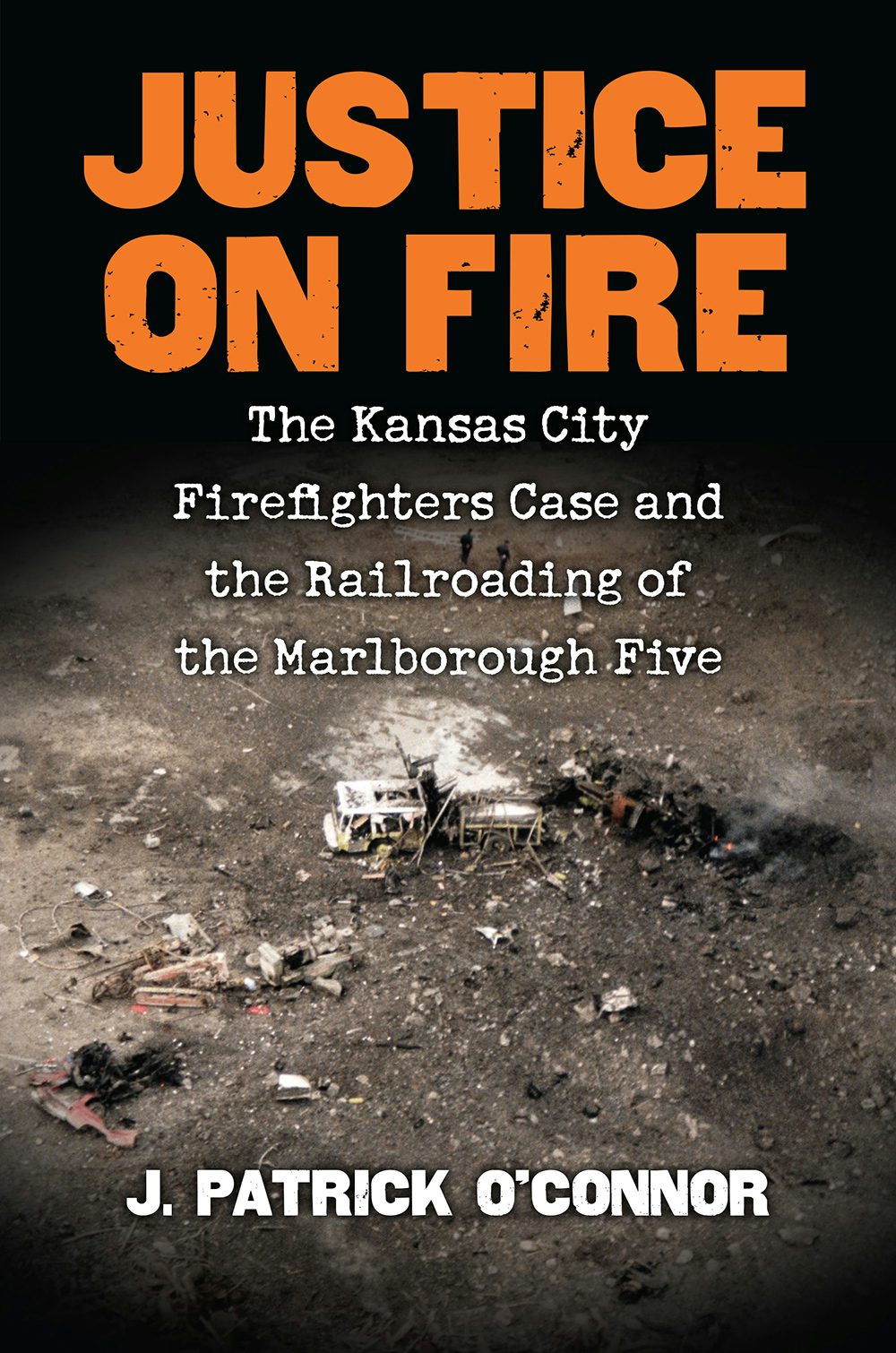
An Analysis of the 8th Circuit Opinion in the Firefighters Case

South Kansas City Blast Site

South Kansas City Blast Site

by J.J. Maloney

On Oct. 30, 1998 the 8th U.S. Circuit Court of Appeals denied the appeal of five defendants convicted of causing the deaths of six Kansas City firefighters in 1988. The defendants, Darlene Edwards, Frank Sheppard, Earl (Skip) Sheppard, Bryan Sheppard and Richard Brown, were sentenced to life imprisonment without possibility of parole.

For months the defendants, and their attorneys, had been hoping the 8th Circuit’s lengthy deliberations might lead to a new trial. The case was argued before the 8th Circuit on April 15, 1998. At time of oral argument, the three judge panel had sharply questioned Assistant U.S. Attorney Paul Becker, head of the Organized Crime Strike Force in Kansas City, who had prosecuted the case. This sharp questioning caused many to believe the 8th Circuit would overturn the convictions.

As it turns out, on the very day the decision was handed down, Assistant U.S. Attorney Paul Becker was in Washington receiving an award from U.S. Attorney General Janet Reno for winning convictions in the case. The U.S. Treasury Department had earlier given an award to retired ATF Special Agent Dave True for putting the case against the five defendants together. (Ironically, the Missouri Bar Association gave this author its 1997 "Excellence in Legal Journalism Award" for two lengthy articles that forcefully say the five defendants are innocent.)

KC Firefighters Case 8th U.S. Circuit Court of Appeals Full Opinion

The Firefighters Fountain in Kansas City

United States Court of Appeals for the eighth circuit ___________

No. 97-2935

___________

Pages

Subscribe to RSS - Innocence Cases